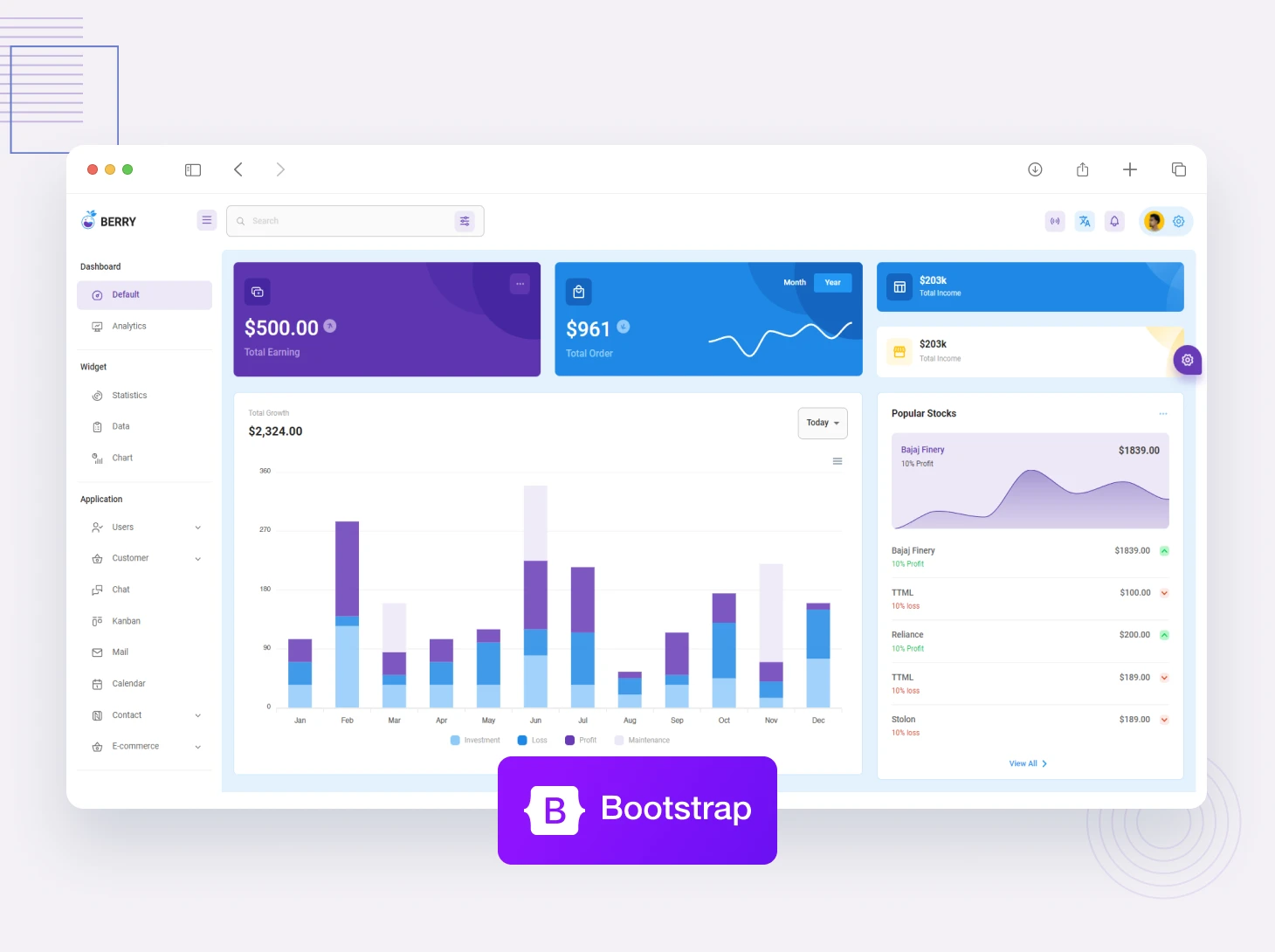
deal of the year – Hello, are you looking for the best admin template with the lowest price than others? I am here with a piece of very good news related to the Admin Template. Project Developers, IT Agencies, and all others who are looking for a new admin Dashboard template for their next project, not an issue anymore. CodedThemes have brought a huge off on all their templates.

Share this:

In today’s digital age, having a website that adjusts fluidly to different devices is more than a trend, it’s a requirement. With the rise of smartphones, tablets, and various screen sizes, ensuring that your website appears and performs properly across all devices is critical for engaging users and attaining online success. This overview will help you through the steps of building a responsive website, from planning and design to coding and testing.

What is Responsive Web Design?

Responsive web design is a method of building and maintaining websites that provide excellent viewing and interaction experiences on a variety of devices and screen sizes. By utilizing media queries, fluid grids, and flexible layouts, responsive design allows the information and layout of a website to adapt to the user’s device in real-time, eliminating the need to create separate versions of the site for different devices.

STEP 1: Start with Wireframes

Wireframing is an important step in the website design process because it helps you sketch out the structure and layout of your site without being distracted by visual design components. Begin by designing wireframes for various screen sizes, concentrating on the most important aspects and functionality of your website.

STEP 2: Decide Breakpoints

The CSS code for your website’s layout changes at specific areas called breakpoints so that it can adapt to different screen sizes. Define breakpoints for popular device sizes and orientations, such as smartphones (portrait and landscape), tablets, and desktops.

CSS Code:

/* Example of defining breakpoints */

@media only screen and (max-width: 600px) {

    /* Styles for small screens */

}

@media only screen and (min-width: 601px) and (max-width: 1024px) {

    /* Styles for medium screens */

}

@media only screen and (min-width: 1025px) {

    /* Styles for large screens */

}

STEP 3: Design for small displays first

A mobile-first approach to design ensures that your website is optimized for small displays and gradually improved for larger ones. Begin by developing and prototyping for mobile devices, emphasizing simplicity, clarity, and usability.

STEP 4: Create a Fluid Grid

A fluid grid system dynamically adapts your website’s layout to multiple screen sizes by using percentages instead of fixed pixel values for widths and margins. Develop a flexible grid system with CSS frameworks such as Bootstrap or develop bespoke grid layouts with CSS Grid or Flexbox.

CSS Code:

/* Example of creating a fluid grid */

.container {

    width: 100%;

    max-width: 1200px;

    margin: 0 auto;

    padding: 0 20px;

    box-sizing: border-box;

}

.column {

    width: 100%;

    padding: 0 20px;

    box-sizing: border-box;

}

@media only screen and (min-width: 768px) {

    .column {

        width: 50%;

    }

}

Create beautiful admin panel with
ready to use Admin Templates

STEP 5: Optimize Images for Responsive Design

Images are an essential component of online design, but they can have a big impact on your website’s performance, particularly on mobile devices. Optimize photos for responsive design by using appropriate file formats, scaling images based on screen size, and adopting strategies such as lazy loading to improve website load time.

HTML Code:

<!– Example of optimizing images –>

<img src=”image.jpg” alt=”Responsive Image” class=”responsive-image”>

CSS Code:

/* Example of CSS for responsive images */

.responsive-image {

    max-width: 100%;

    height: auto;

}

STEP 6: Optimize Typography for Responsive Design

Typography is extremely important for readability and user experience, particularly on small screens. To optimize typography for responsive design, use relative units such as ems or rems for font sizes, ensure proper line spacing, and select web-safe fonts that render well across multiple devices and browsers.

CSS Code:

/* Example of CSS for responsive typography */

body {

    font-family: ‘Roboto’, sans-serif;

    font-size: 16px;

    line-height: 1.6;

    color: #333;

}

h1, h2, h3 {

    font-weight: bold;

}

p {

    margin-bottom: 1em;

}

Wrapping It Up

You can build a responsive website by following these steps: starting with wireframes, establishing breakpoints, designing for tiny displays first, creating a fluid grid, optimizing pictures, and optimizing fonts. Remember to thoroughly test your website and iterate on your design in response to user feedback to ensure optimal performance and usability.

CheckoutElevate Your Design: 15 Essential UX Tools for Modern Creators

Share this:

Malware is one of the major problems with which website owners have to deal consistently. It is a sad reality that everyone has to face at some point. Recent research shows that malware attacks happened on nearly 1% of websites every week. That’s why you must know about the exact method to protect your website from malware.

Share this:

Are you looking to know what kind of pros and cons bring by the W3C validation? If yes, then this post will help you in every possible manner. Here, we will talk about it briefly so that readers know what exactly it is & W3C Pros and Cons.

Share this:

SEO is considered as a daunting task even by professionals, but no can deny that it holds utmost importance. Nowadays, it holds an important place in an organization’s strategy if they want to be successful. However, the constant changes in the algorithm made by Google and other search engines create a headache for platforms. For easing confusing and educating readers, we have created this post about the top 10 tricks to make your website SEO friendly.

Share this:

With so many choices in this day and age, especially in choosing frameworks, there are many to choose from. Choosing a tech stack becomes a struggle because you need to take all the factors such as budget, time, app size, project objectives, and resources into consideration. Whether you are a beginner, a freelancer, a developer, a project architect, or a resource manager, it is a wise idea to get to know the plus and minus points of each framework in detail. To decide the best one you will have to rely upon the scope and the programming framework’s compatibility with your needs regarding your project, etc.

Share this:

If you want to boost the performance of your site, then there is a need for proper images on it. Not even a single person can imagine their site without an image. However, the images should be properly optimized if you don’t want to affect the speed of your site. If you are confused about how to complete this process, then you are in the right place.

Share this:
Popular Products
Popular Posts
The Ultimate Managed Hosting Platformimp
Share this: